TRANSBOUNDARY HAZE: HOW MUCH LONGER MUST ASEAN RELY ON DIPLOMACY ALONE?
For more than two months, communities across Southeast Asia have been struggling with prolonged haze. Schools have been forced to close, outdoor activities disrupted, and respiratory illnesses are on the rise. Beyond the inconvenience, there are serious consequences for public health, safety, economic productivity, education and our overall quality of life.
And yet, this is not a new problem.
ASEAN adopted the Agreement on Transboundary Haze Pollution in 2002. More than two decades later, we are still dealing with the same recurring crisis. We now have another ASEAN Haze-Free Roadmap (2023–2030), but the question remains, “Are our regional commitments translating into meaningful action on the ground?”
Diplomatic engagement has always been central to ASEAN’s approach. More than a decade ago when I represented Malaysia during an environmental-related discussion in Seoul, I was reminded by the Government not to name a specific country when talking transboundary haze to avoid conflicts. While I recognise the importance of maintaining good relations among neighbouring countries, I believe we have reached a point where diplomacy alone is no longer sufficient.
Regional cooperation without accountability risks becoming an endless cycle of discussions, commitments and recurring crises.
Recent concerns about Malaysian-linked companies potentially associated with land and forest fires in Indonesia also deserve serious attention. If companies from Malaysia or any other ASEAN country are found to be responsible, they must be held accountable. Environmental responsibility must transcend national boundaries and corporate interests. Allegations should be investigated transparently, with findings made public and appropriate action taken based on credible evidence.
So, how should ASEAN move forward?
First, we need stronger regional accountability and enforcement.The existing ASEAN agreement should be reviewed to establish clearer compliance mechanisms, measurable obligations and transparent reporting. ASEAN must be prepared to examine stronger legal and regulatory measures where existing voluntary approaches have proven insufficient.
Second, science and technology must drive enforcement, not merely monitoring. We already have access to satellite imagery, hotspot detection, remote sensing and land-use information. These should be integrated with concession ownership data and ground investigations through a transparent regional mechanism to identify the sources of fires, land owners and determine responsibility.
Third, the polluter-pays principle needs to be taken seriously. Those proven responsible for causing environmental damage should bear the costs of prevention, restoration and appropriate remediation. ASEAN should explore a regional framework for addressing the public health and economic impacts of transboundary haze, including possible compensation mechanisms.
Fourth, we must invest more seriously in prevention. This includes sustainable land management, peatland restoration, stricter controls on open burning, and support for communities and smallholders to adopt alternatives to land clearing by fire. Prevention must become a year-round priority rather than a response when the haze has already crossed national borders.
Finally, ASEAN needs to make its Haze-Free Roadmap truly accountable. With 2030 approaching, we should be able to demonstrate measurable reductions in fire incidents, haze exposure and associated health impacts. Independent scientific assessment and publicly accessible progress reporting would help establish whether our strategies are actually working.
This is not about pointing fingers at Indonesia or any particular nation. The people living closest to the fires are themselves among the most severely affected. Neither should Malaysia shy away from investigating its own companies if credible evidence warrants it.
It is about recognising that transboundary environmental problems require collective responsibility, transparent governance and the courage to make difficult decisions.
We have the scientific knowledge, technology and institutional frameworks. What we need is the collective political will to translate them into effective action.
As environmental scientists, we often speak about evidence-based policymaking. But evidence means little if it does not lead to decisions that protect people and the environment.
Respecting national sovereignty is important. But protecting the health and well-being of millions of ASEAN citizens is equally important.
Clean air should not be a privilege determined by which way the wind blows.
It is time to move beyond diplomatic statements towards measurable action, responsibility and accountability.
—
Prof. Ts. Dr. Zainura Zainon Noor
Chair, Environment Committee
Akademi Sains Malaysia
Director
Centre for Environmental Sustainability and Water Security – IPASA Universiti Teknologi Malaysia (UTM)
Views expressed are personal.
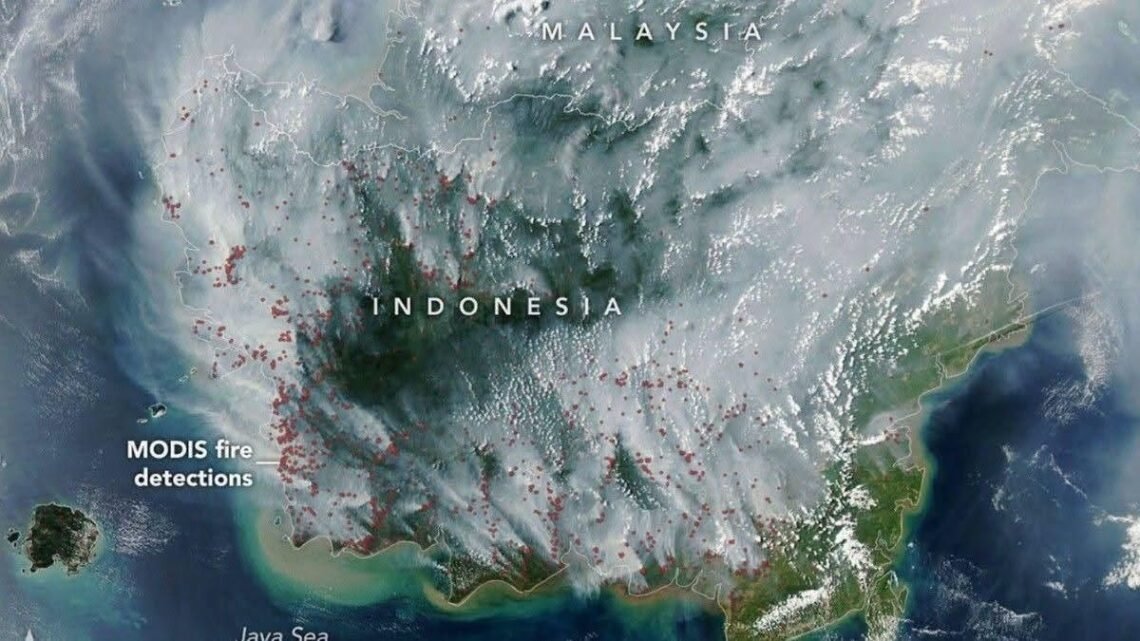
Satellite imagery: NASA Terra/MODIS, 14 September 2026.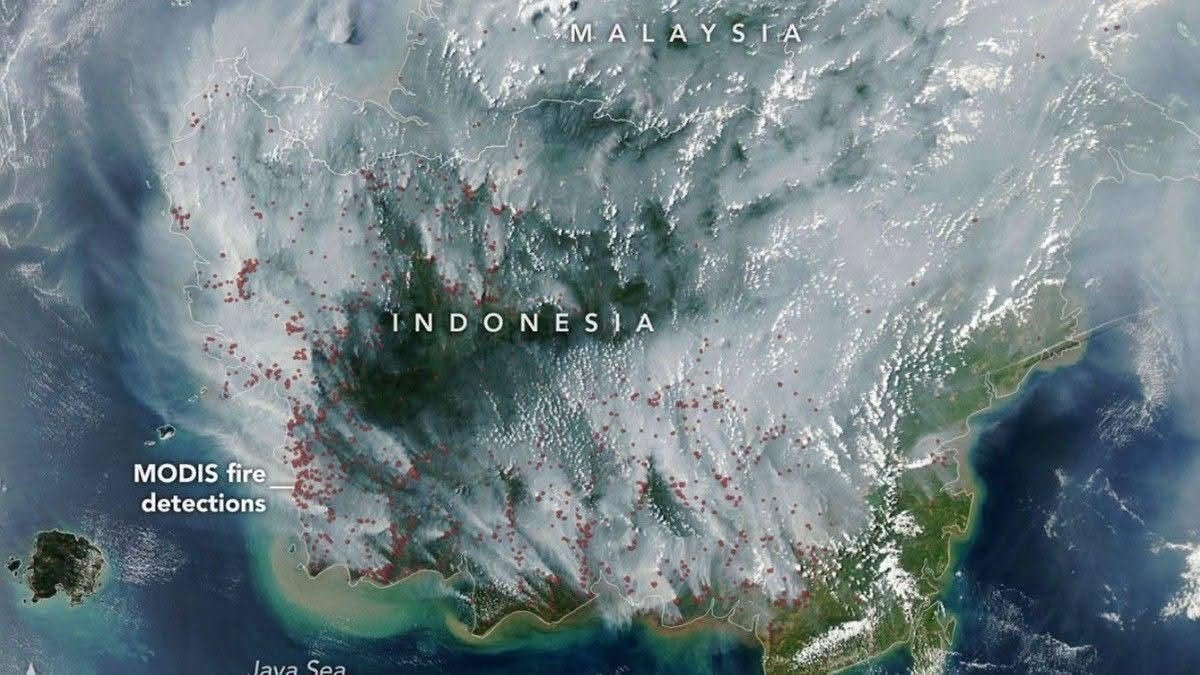
Source